
The Summit
A THINK TANK FOR THE CULTURE OF TOMORROW
Friday, July 24–Sunday, July 26, 2026
Supported by Pro Scientia et Arte
Presented in partnership with Forbes Swiss
Held under the patronage of the Association L’Atelier de Balthus
Overview
The Summit brings together leading figures from music, cultural management, media, technology, business and the arts to explore the most pressing questions facing cultural institutions and classical music in the 21st century. Through keynote presentations, interviews and panel discussions, participants examine how culture can remain relevant, sustainable and impactful in a rapidly changing world.
Speakers & Panellists
Dr. Patricia Ernst, Partner and Notary, Morrison & Foerster LLP
Jakub Fiebig, Founder & CEO, Orfeon
Peter Gartiser, Founder and Partner, METRUM Management Consulting, Munich
Paweł Jabłoński, CTO, Orfeon
Setsuko Klossowska de Rola, UNESCO Artist for Peace and President, Association L’Atelier de Balthus
Marco Malagodi, Professor of Musicology, University of Pavia; Scientific Director, Arvedi Laboratory, Cremona
Marie Babette Nierenz, Artistic Director, Philharmonie Essen
Germinal Roaux, Photographer, Screenwriter and Film Director
Faouzi Skali, Anthropologist, Author, and Founder of the Fez Festival of World Sacred Music and the Fez Festival of Sufi Culture
Ilona Schmiel, Artistic Director, Tonhalle-Orchester Zürich and Tonhalle Zürich
Matthias Schulz, Artistic Director, Opernhaus Zürich
Dr. Clemens Trautmann, President, Deutsche Grammophon
Moderators
Daniel Hope, Artistic Director, Menuhin Festival Gstaad
Klaus Fiala, Editor-in-Chief, Forbes Swiss
Jessica Lustig, Managing Director, 21C Media Group
Antonin Scherrer, Music Historian and Dramaturg, Menuhin Festival Gstaad
The idea of The Summit is deeply connected to Yehudi Menuhin. In many conversations, he encouraged me to see music not only as an art form, but as a responsibility. The Summit is my attempt to create a space for that idea today – a place where artists, decision-makers and the next generation come together to reflect on how culture can shape the future.
— Daniel Hope
SESSION I
Friday, July 24, 2026 | 09:00–13:00
Moderator: Daniel Hope
Who Leads Culture into the Future? Leadership, Governance & the Next Generation
As cultural institutions face growing expectations, changing audiences and increasing financial pressure, what kind of leadership is needed for the future? How can established organisations remain relevant while creating space for the next generation of cultural leaders?
Programme
09:00–10:00: Arrival & Coffee
10:00–10:30: Opening Conversation Daniel Hope in conversation with Setsuko Klossowska de Rola
10:30–11:00: Keynote – Ilona Schmiel
11:00–11:30: Keynote – Matthias Schulz
11:30–11:50: Break
11:50–13:00: Panel Discussion
SESSION II
Friday, July 24, 2026 | 13:00–17:30
Moderator: Klaus Fiala
Between Survival and (R)evolution: Digital Transformation & AI in the Arts
Artificial intelligence and digital technologies are reshaping every aspect of cultural production, communication and audience engagement. How can institutions embrace innovation while preserving artistic excellence, authenticity and human connection?
Cultural Diplomacy: Can Culture Achieve What Politics Cannot?
Culture does more than entertain—it preserves knowledge, shapes identity and builds bridges across borders and generations.
Programme
13:00–14:00: Arrival & Coffee
14:00–14:50: Keynote – Jakub Fiebig & Paweł Jabłoński
14:50–15:20: Keynote – Dr. Clemens Trautmann
15:20–15:50: Keynote – Dr. Patricia Ernst
15:50–16:10: Break
16:10–16:40: Keynote – Germinal Roaux
16:40–17:30: Panel Discussion
SESSION III
Saturday, July 25, 2026 | 12:30–17:30
Moderator: Klaus Fiala
Culture and Economic Value: Why the Arts Matter—and How We Talk About Their Value
As public resources become increasingly constrained, cultural institutions are exploring new models of funding, partnership and value creation while balancing artistic excellence, financial sustainability and societal relevance.
Cultural Diplomacy: Can Culture Achieve What Politics Cannot?
Culture does more than entertain—it preserves knowledge, shapes identity and builds bridges across borders and generations.
Programme
12:30–13:00: Arrival & Coffee
13:00–13:10: Opening Remarks – Klaus Fiala
13:10–13:40: Keynote – Peter Gartiser
13:40–14:10: Keynote – Marie Babette Nierenz
14:10–14:30: Conversation – Setsuko Klossowska de Rola & Germinal Roaux
14:30–15:00: Break
15:00–16:00: Menuhin Festival String Academy Concert
16:00–16:20: Break
16:20–17:30: Panel Discussion
SESSION IV
Sunday, July 26, 2026 | 13:30–17:30
Moderators: Jessica Lustig & Antonin Scherrer
Cultural Diplomacy: Can Culture Achieve What Politics Cannot?
Culture does more than entertain—it preserves knowledge, shapes identity and builds bridges across borders and generations.
Can Culture Save the World?
Culture alone may not save the world, but it preserves within us the ability to recognise one another as members of a shared humanity. It is the living memory through which civilizations learn to encounter one another without losing themselves, transforming differences into promise rather than threat. By cultivating beauty, meaning and wisdom, culture opens a path towards peace—for the greatest victories are never won against other people, but against ignorance, fear and the forgetting of our common dignity.
Cultural Heritage: The Case of Historical Violins
From the centuries-old craft of instrument making to the role of science and technology in preserving cultural heritage: how can artistic traditions remain vibrant and relevant in a changing world?
Programme
13:30–14:00: Arrival & Coffee
14:00–14:50: Keynote – Jessica Lustig
14:50–15:20: Keynote – Faouzi Skali
15:20–15:40: Break
15:40–16:30: Keynote – Marco Malagodi
16:30–17:30: Panel Discussion
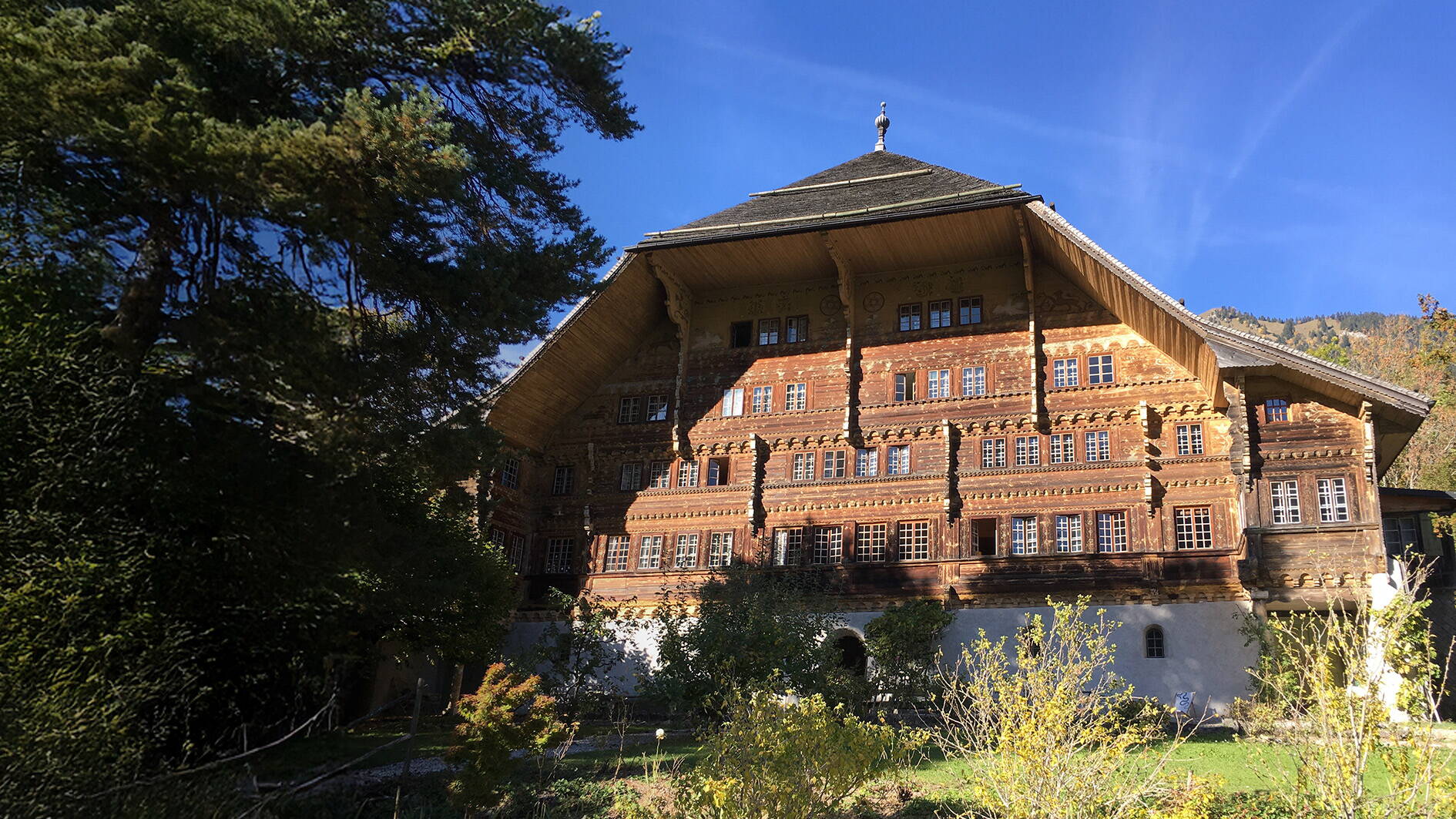
Setsuko, Balthus and the Grand Chalet of Rossinière
In the mid-18th century, the enterprising cheesemaker Jean David Henchoz built an extraordinary house, originally intended to store his impressive cheese production — up to 600 wheels, which he sold at markets in Vevey and Lyon.
What began as the “Grande Maison” is today one of the most remarkable wooden houses in the entire Alpine region: 113 windows, 60 rooms — 40 of them habitable — and a monumental shingle roof that crowns the building like a protective canopy.
In 1852, the house was converted into a guesthouse and given its evocative name: Grand Chalet. It soon hosted distinguished guests such as Victor Hugo and Léon Gambetta.
A new chapter began in 1976, when the Polish-born painter Balthus acquired the property. A year later, he moved in with his wife, the Japanese painter and ceramic artist Setsuko Klossowska de Rola, and their daughter Harumi.
The Grand Chalet soon became a vibrant meeting place for the art world. Figures such as Yehudi Menuhin were frequent visitors. The encounter between Balthus and Menuhin during the 1993 festival in Rossinière remains particularly memorable.
Today, the foundation “L’Atelier de Balthus” preserves the artist’s legacy. A chapel in the heart of Rossinière, as well as the studio itself, are open to visitors.